Purpose and suitability
The aim is to shut down the refluxing veins that are the source of the problem, so symptoms improve and skin complications are prevented or helped to heal. Indications range from aching, heaviness and swelling to skin changes, recurrent phlebitis, bleeding and selected venous ulcers. Treating the visible veins alone, without the underlying reflux, gives poor results.
- Symptomatic varicose veins (aching, heaviness, swelling, itch)
- Venous skin changes or eczema
- Recurrent superficial vein inflammation
- Bleeding from a varicose vein
- Selected venous ulcers
Deep vein health, previous thrombosis, pregnancy status and arterial circulation all influence which options are appropriate.
When treatment is more than cosmetic
Treatment becomes more important when venous reflux is causing recurrent inflammation, bleeding, ankle swelling, eczema, pigmentation, hardening of the skin or ulceration. In these situations, closing the source of reflux may reduce venous pressure and support skin or wound healing. The plan may be staged, with the main refluxing vein treated first and residual surface veins addressed later.
Assessment and preparation
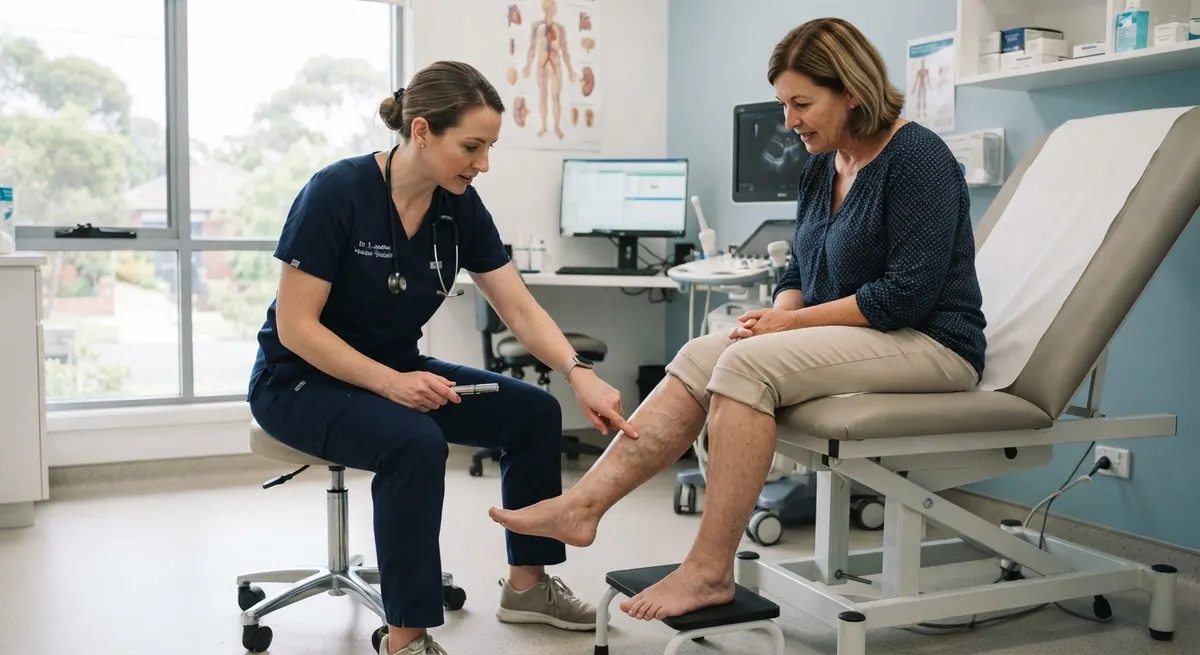
Duplex ultrasound identifies the source and pattern of reflux and excludes deep venous obstruction or previous thrombosis. Medications, allergies and any plans for pregnancy or travel are reviewed, and practical matters such as compression stockings and time off work are discussed in advance. Most procedures need little other preparation, and specific instructions are given in writing.
How the procedure is performed
Radiofrequency ablation
A catheter inside the incompetent vein delivers controlled radiofrequency energy to heat and close it, and blood redirects through healthy veins. It is commonly performed under local anaesthetic as a day procedure.
Endovenous laser ablation
A fine laser fibre delivers heat within the vein. Its purpose is the same as radiofrequency ablation; the choice reflects anatomy, equipment and surgeon preference.
Medical adhesive (VenaSeal)
Medical adhesive closes the vein without thermal energy and may reduce the number of local anaesthetic injections needed along the vein. Not every vein pattern is suitable, and a local inflammatory reaction can occur.
Sclerotherapy
Liquid or foam sclerosant is injected to close veins, with ultrasound guidance for veins that cannot be seen through the skin. Several sessions may be required.
Phlebectomy
Small varicose tributaries are removed through tiny skin punctures, often combined with treatment of the main refluxing vein.
The technique, or combination of techniques, is matched to the mapped anatomy: thermal ablation or adhesive for the main refluxing trunk, with phlebectomy or ultrasound-guided sclerotherapy for tributaries. Surgery under general anaesthesia is reserved for selected patterns, and the plan is confirmed against the ultrasound on the day.
Recovery and follow-up
Walking is encouraged straight after treatment, and most people return to normal light activity quickly. Compression may be recommended depending on the technique, and strenuous exercise and long travel may be restricted briefly. Bruising, tightness, tenderness and temporary pigmentation are common and settle. Follow-up ultrasound confirms vein closure and identifies any residual veins needing staged treatment.
Risks and possible complications
- Bruising and temporary skin staining
- Superficial thrombophlebitis
- Nerve irritation causing patches of numbness or tingling
- Infection
- Deep vein thrombosis and, rarely, pulmonary embolism
- Thermal skin injury with heat-based techniques
- Recurrence or residual veins needing further treatment
Treatment closes the existing abnormal veins but cannot prevent all future varicose veins, so recurrence over the years is possible.
Alternatives and practical considerations
Conservative care with walking, elevation, skin care and properly fitted compression may be appropriate when symptoms are mild or a procedure is not desired. When intervention is considered, the alternatives include radiofrequency or laser ablation, medical adhesive, sclerotherapy, phlebectomy and, less commonly, open surgery.
The best treatment is determined by duplex ultrasound rather than by the appearance of the surface veins alone. Patients should understand which refluxing vein is being targeted, why a particular technique is preferred, whether branch veins will be treated at the same time or later, and how much improvement can reasonably be expected in pain, swelling or skin change.
Most procedures allow walking immediately and a relatively quick return to normal activities, although bruising, tenderness and tightness are common for a short period. Recurrence may reflect new disease in other veins rather than failure of the treated segment. Follow-up and any need for compression should be discussed in advance, particularly when treatment will be staged.
Varicose vein treatment at Yarra Vascular Surgeons
Yarra Vascular Surgeons provides duplex mapping and the full range of options, radiofrequency, laser, medical adhesive, sclerotherapy, phlebectomy and surgery, so treatment is matched to vein anatomy, symptoms, skin changes and individual recovery priorities.
Arrange a vascular assessment
Effective varicose vein treatment starts with finding the source of reflux, not just treating the visible veins. Book an assessment with duplex ultrasound mapping to see which options suit your veins.